



Job Context/Purpose
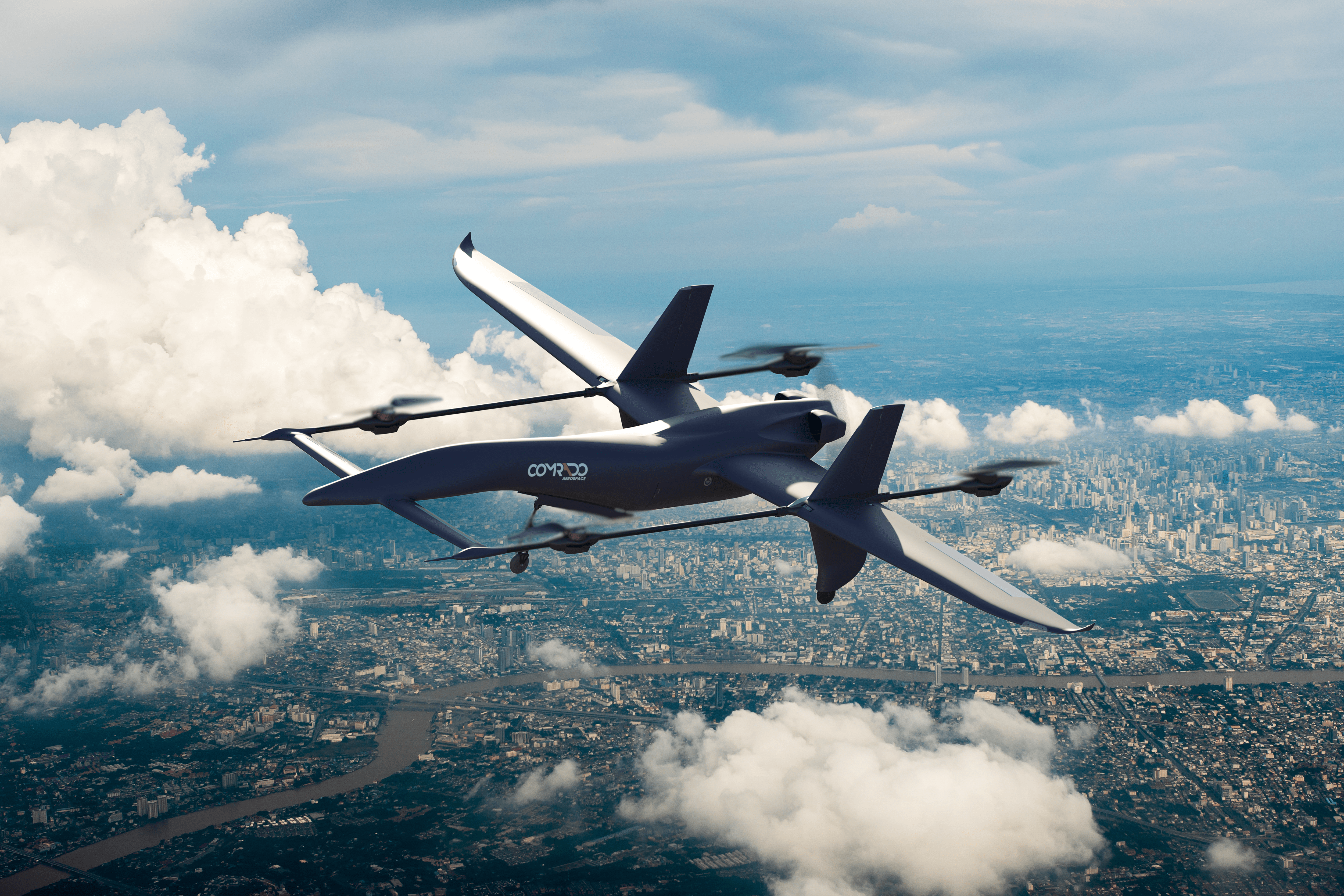
We are looking for a Structural Analysis (FEA) Engineer – Fresher to support UAV airframe structural design, finite element analysis, and structural qualification activities. The role provides hands-on exposure to FEA, composite and metallic structures, structural testing, and aircraft structural analysis using tools such as ANSYS, under the guidance of senior engineers.
Engineer – Structural Analysis (FEA) – MTS-I
1. Basic Details
Role: Engineer – Structural Analysis
Function: Structural Modeling
Sub-Function: FEA
Publishing Date: 23 September 2026
Location: Bengaluru, Karnataka
2. JOB CONTEXT / PURPOSE
Support the team responsible for airframe structural design, FEA, and structural qualification of UAVs primarily.
This is an entry-level role for a fresh graduate to build hands-on capability in aircraft structures, metallic/composite materials, structural analysis, and FEA using tools such as ANSYS, under the guidance of senior engineers.
3. KEY RESPONSIBILITIES
A. Functional / Team Responsibilities
- Assist in defining structural requirements, design constraints, and specifications based on project objectives and applicable airworthiness standards.
- Build and idealise finite element models of UAV airframe components and assemblies from CAD geometry, including geometry clean-up, element selection, meshing, joints, connections, contacts, and boundary conditions.
- Perform linear static, buckling, modal, fatigue, and thermal-structural analyses of primary and secondary airframe structures under senior guidance.
- Perform composite laminate definition and analysis, including ply lay-up, failure criteria, inter-laminar checks, and sandwich construction.
- Derive and apply load cases from flight, ground, landing, gust, and manoeuvre conditions; compute margins of safety for critical load cases.
- Validate FEA against classical hand calculations, analytical methods, and available test data; check mesh quality, convergence, and realistic load paths.
- Support structural sizing and weight optimisation through design iterations involving lay-up, thickness, material selection, and joint configuration.
- Support coupon, element, and component-level structural testing, including test article definition, instrumentation plans, and test matrices.
- Support code and SOP development for structural analysis/FEA workflows.
- Stay updated with UAV advancements, emerging technologies, and industry trends through research and continuous learning.
B. Technical Documentation
Prepare high-quality technical documentation for design, analysis, and testing, including:
- Structural design/stress analysis reports with load cases, assumptions, and margins of safety.
- Test matrices and reports.
- Detailed diagrams.
- Material selection and laminate definition/lay-up documents.
- Model documentation covering idealisations, assumptions, load cases, boundary conditions, and result summaries.
C. Additional Functions
- Coordinate with aerodynamics, propulsion, flight, and system engineering teams for inputs/outputs including loads, interfaces, mass budgets, and mounting provisions.
- Support manufacturing/quality teams on composite processing, defect disposition, and repair schemes.
- Support the flight team on structural clearances and post-flight inspection.
4. MANAGERIAL RESPONSIBILITIES
- Plan and track own tasks and deliverables against timelines; flag risks and delays early.
- Follow best practices, design standards, and QA processes.
- Maintain traceable records of analysis, inputs, assumptions, and results for team review.
5. KNOWLEDGE, SKILLS & EXPERIENCE
Educational Qualification
- Bachelor’s or Master’s degree in Aerospace Engineering, Mechanical Engineering, or a related field.
- Specialization in structures, mechanics of solids, and composite materials preferred.
Experience
- Fresher with 0–1 year of experience.
- Internship, academic project, or final-year thesis in aircraft structures, FEA, composite materials, or UAVs preferred.
6. TECHNICAL COMPETENCIES
UAV Systems
- Fixed-wing, VTOL, and multirotor UAVs.
- Major airframe assemblies including wing, fuselage, empennage, booms, and landing gear.
- Payload and propulsion integration.
- Understanding that system-level choices drive structural loads and interfaces.
Aircraft Structures
- Semi-monocoque structures.
- Spars, ribs, stringers, skins, bulkheads, longerons, joints, and fittings.
- Load paths, shear flow, bending, torsion, buckling, and crippling.
Engineering Mechanics
- Strength of materials.
- Theory of elasticity.
- Structural dynamics and vibration.
- Basics of fatigue, damage tolerance, and fracture.
Aerospace Materials
- Aluminium alloys, steels, titanium, and polymer-matrix composites.
- Carbon/glass fibre, prepreg, sandwich cores, and adhesives.
- Mechanical properties, allowables, and material selection criteria.
Composite Mechanics
- Classical Lamination Theory.
- Ply orientation and lay-up.
- Maximum stress/strain criteria.
- Tsai-Hill and Tsai-Wu criteria.
- Inter-laminar shear.
- Delamination.
- Sandwich structures.
FEA Fundamentals
- 1D, 2D, and 3D element types/formulations.
- Meshing and mesh quality.
- Convergence.
- Boundary conditions and constraints.
- Contacts.
- Material models.
- Result interpretation and sanity-checking.
FEA Tools
- Working knowledge of ANSYS Mechanical/Workbench and ACP for composites.
- Static, buckling, modal, and thermal-structural analysis.
- Exposure to Abaqus, MSC Nastran/Patran, HyperMesh, and Femap is an advantage.
Classical Analysis
- Classical hand calculations to size structures and independently verify FE results.
Manufacturing Awareness
- Composite lay-up and curing.
- Bonding and fastening.
- Sheet-metal forming.
- Machining.
- Additive manufacturing.
Programming / Automation
- Exposure to MATLAB, Python, and ANSYS APDL for automation and post-processing through coursework, projects, or internships.
7. BEHAVIORAL COMPETENCIES
- Excellent problem-solving and analytical thinking.
- Strong attention to detail and accuracy in structural calculations, analysis, and documentation.
- Effective communication and interpersonal skills.
- Ability to work with multidisciplinary teams.
- Willingness to learn, take direction, and act on feedback.
- Adaptability and flexibility in a fast-paced and evolving UAV environment.
8. SPECIFIC TOOL KNOWLEDGE
FEA
- ANSYS Mechanical/Workbench.
- ANSYS ACP.
- Abaqus, MSC Nastran/Patran, HyperMesh, and Femap as an advantage.
Test DAQ / Post-Processing
- Strain gauges.
- Load cells.
- Accelerometers.
- DIC as an advantage.
CAD
- SolidWorks.
- CATIA.
- NX.
- Fusion 360 for geometry creation, clean-up, and defeaturing.
Other Tools
- MATLAB.
- Python.
- MS Excel.
- MS Word.
9. UAV-SPECIFIC COMPONENTS
Knowledge/exposure to:
- Control surface actuators.
- Electric propulsion units.
- Landing gear.
- Payload mounts.
- Fastening hardware.
- Other UAV-specific components.
10. INTERNAL CONTACTS
Multi-disciplinary Teams and Management
Purpose: Data and requirements exchange
Frequency: Regular
Testing Teams
Purpose: Help identify correct test standards and prepare test matrices
Frequency: Regular